

What Is Bridgeland Central? A Guide for Cypress Homebuyers
You’re our first priority. Every time.
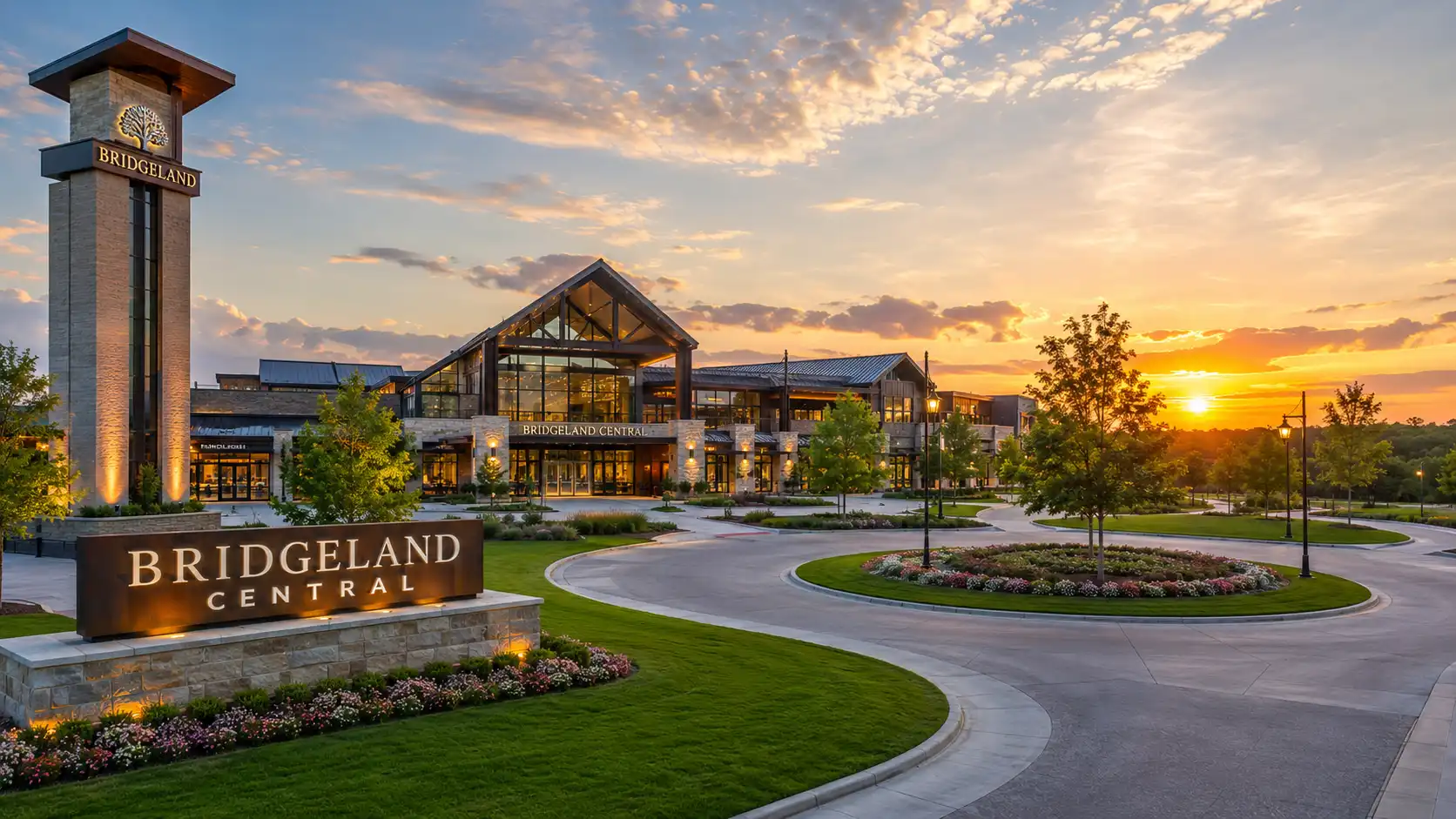
Bridgeland is widely known for its neighborhoods, trails, lakes, parks, and new construction. Bridgeland Central represents the next stage of that vision.
Rather than functioning as another traditional residential village, Bridgeland Central is being developed as the mixed-use center of the larger Bridgeland community. Plans bring together homes, apartments, offices, stores, restaurants, healthcare, hospitality, entertainment, public spaces, and employment opportunities in a more connected setting.
For buyers, that creates a different type of opportunity than purchasing in a conventional suburban section. A home in or near Bridgeland Central may offer easier access to shopping, dining, trails, schools, workplaces, and future destinations. It may also come with trade-offs involving construction activity, denser housing, traffic patterns, lot sizes, and continued change around the property.
Here is what prospective buyers, current homeowners, and people relocating to Cypress should know.
Bridgeland Central Explained
Bridgeland Central is the planned urban and commercial core of Bridgeland, an approximately 11,500-acre master-planned community in Cypress. Bridgeland Central itself covers approximately 925 acres and is planned to include more than 12 million square feet of development at full buildout. Its intended mix includes retail, restaurants, offices, healthcare, hotels, entertainment, multifamily housing, public spaces, and residential neighborhoods.
The simplest way to understand the difference is this:
- Bridgeland is the larger master-planned community.
- Bridgeland Central is the emerging town center and mixed-use Toro district within it.
The Toro district is intended to give residents access to more daily needs, workplaces, and recreation closer to home. Instead of separating neighborhoods from commercial development by long drives, the plan places different uses closer together and connects them through streets, trails, parks, and pedestrian-oriented areas.
Development will occur over time, so Bridgeland Central should be viewed as both an existing destination and a long-term project. Some housing, retail, dining, and services are already available, while several major components remain under development or are still planned.
Where Is Bridgeland Central?
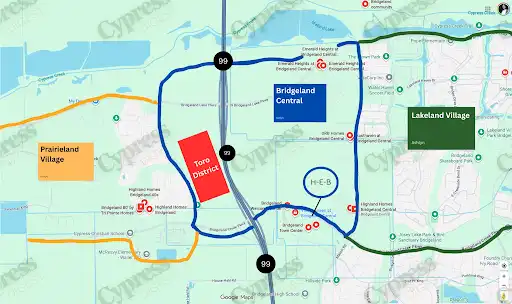
Bridgeland Central is positioned near the Grand Parkway in the central portion of the larger Bridgeland development. Its location is intended to make it accessible to Bridgeland residents while also serving the broader Cypress and Northwest Houston area.
Village Green, the first major commercial phase, is located near Bridgeland Creek Parkway and Summit Point Crossing. The broader district extends beyond that initial shopping and dining area and includes residential neighborhoods, employment sites, public spaces, and future large-scale projects.
For buyers, location within Bridgeland Central still matters. A property within walking distance of Village Green may provide a different daily experience from one located closer to a school, lake, major roadway, future office site, or active construction area.
What Is Open in Bridgeland Central Now?
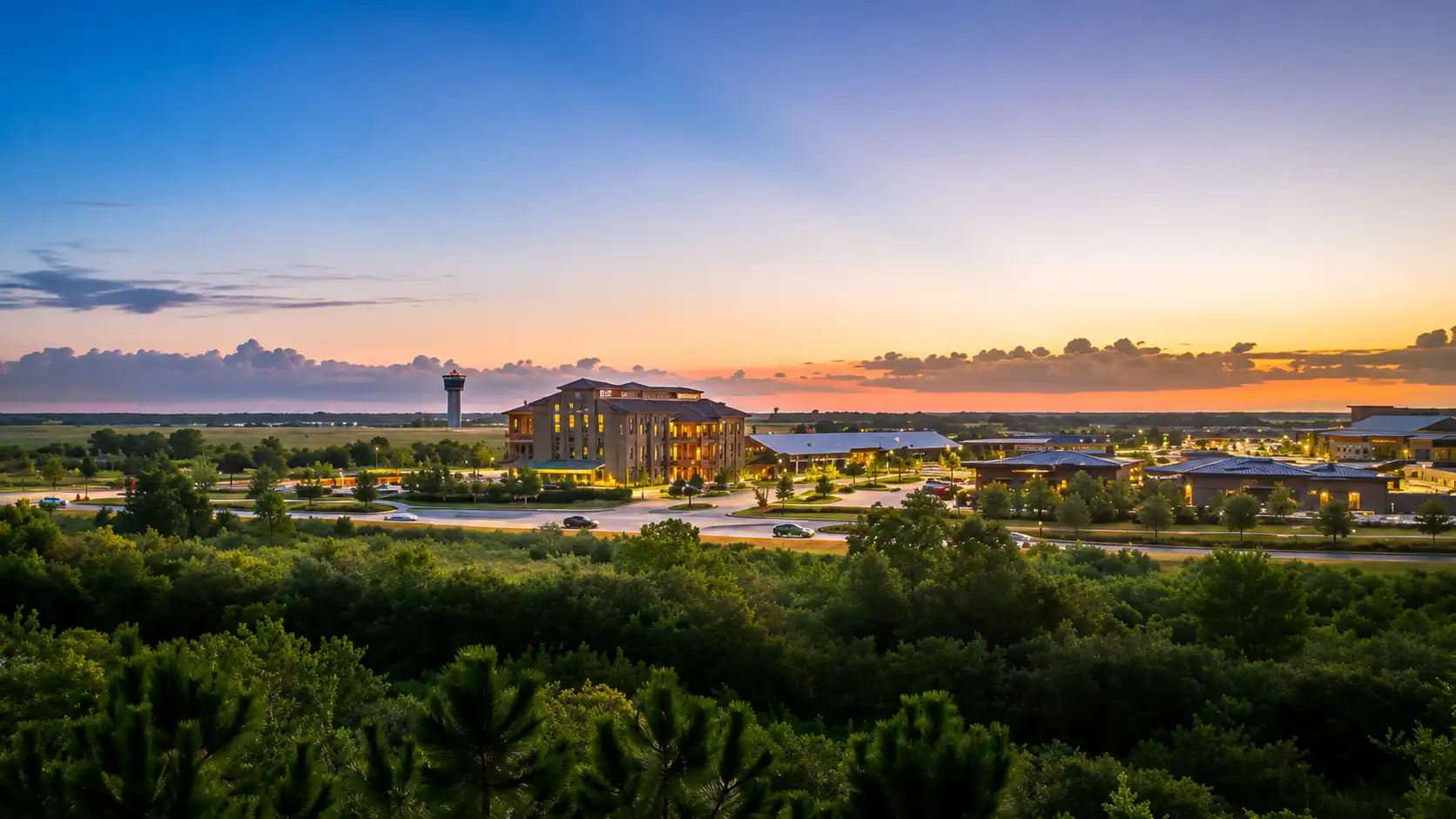
Bridgeland Central is no longer only a concept shown on a development map. Its first commercial areas and residential options are taking shape.
Village Green
Village Green is the initial mixed-use commercial phase of Bridgeland Central. It was planned as a 23-acre development anchored by an H-E-B grocery store and supported by restaurants, neighborhood services, retail spaces, and office development
As of July 2026, the tenant mix includes H-E-B and dining or service businesses such as Jonathan’s The Rub, Crust Pizza Co., Gelato & Co., Sweet Paris Crêperie & Café, Starbucks, Memorial Hermann-GoHealth, Venetian Nail Spa, and P. Terry’s Burger Stand. Additional businesses have been announced as the center continues to fill out.
The significance for residents is straightforward. Grocery shopping, meals, coffee, personal services, and some healthcare needs can be handled within Bridgeland rather than requiring a longer trip outside the community.
One Bridgeland Green
Bridgeland Central’s first phase also includes One Bridgeland Green, a three-story mass-timber office building planned as part of Village Green. Howard Hughes described it as the first mass-timber office development of its kind in the Greater Houston area. The design emphasizes natural light, outdoor connections, shaded areas, bicycle storage, and other features intended to support a modern workplace.
The office component matters because Bridgeland Central is not being designed solely as a shopping area. Employment is a central part of the long-term plan.
Existing Residential Options
Bridgeland Central also includes several types of housing. Current and announced options include Highland Homes’ City Series townhomes, the Easthaven Collection of single-family homes, Emerald Heights, and multifamily living at Starling at Bridgeland.
These communities are generally designed around a more urban or pedestrian-oriented experience than buyers may find in other parts of Cypress.
What Types of Homes Are in Bridgeland Central?
Housing in Bridgeland Central is intended to provide more variety than one traditional subdivision with similar lots and floor plans.
City Series Townhomes
Highland Homes’ City Series includes townhome-style buildings containing two to four residences. The homes use a modern eclectic architectural style and offer three-bedroom layouts, with some plans providing a fourth-bedroom option. According to Bridgeland’s current community information, floor plans range from approximately 1,761 to 2,300 square feet.
These homes may appeal to buyers who prefer a more compact property, newer construction, and proximity to shopping and community destinations.
Easthaven Collection
The Easthaven Collection introduces detached single-family homes designed for Bridgeland Central’s more walkable setting. The plans range from approximately 2,500 to 3,150 square feet and include two- to four-bedroom configurations. Features can include courtyard-style backyards, flexible garages that open into outdoor social areas, front porches, and reduced setbacks intended to create a stronger connection between the home and the street.
This may be an option for buyers who want a detached home without giving up proximity to commercial areas, parks, trails, and community activity.
Emerald Heights
Emerald Heights is a Traditional Neighborhood Design community planned within Bridgeland Central. It is expected to include 350 homesites with one- and two-story homes from David Weekley Homes and Perry Homes. Architectural styles include Scandinavian Modern and Modern Farmhouse designs.
The neighborhood emphasizes connected streets, public spaces, green areas, and pedestrian access to nearby services. Planned features include Merry Meadow Park, walking paths, a dog park, play areas, an event lawn, and connections to Bridgeland’s trail network.
Multifamily Living
Starling at Bridgeland provides apartment-style living within Bridgeland Central. Its amenities include a clubhouse, fitness center, pool, outdoor fitness space, pet park, and gaming lawn. Some residences offer Josey Lake views, private yards, or private garages. The presence of apartments, townhomes, and detached houses supports the district’s goal of accommodating residents at different stages of life.
What Is Planned for Bridgeland Central?
Several major projects help explain why Bridgeland Central is attracting attention well beyond Cypress.
Toro District and the Houston Texans Headquarters
In February 2026, the Houston Texans, Harris County, and Howard Hughes announced Toro District, an 83-acre sports and entertainment destination within Bridgeland Central.
The centerpiece is a 22-acre global headquarters and training complex for the Houston Texans. Plans call for an indoor fieldhouse, three outdoor practice fields, football and business operations space, and flexible event areas. The surrounding district is expected to include restaurants, retail, hotels, healthcare, offices, entertainment, parks, trails, and public services.
The broader Toro District concept includes more than two million square feet of development, including approximately 300,000 square feet of destination and service retail and 250,000 square feet of regional healthcare and sports-medicine space. The current plan is subject to refinement as design and construction progress, and completion is scheduled for 2029.
For homeowners, the project could create more nearby entertainment, services, employment, and regional visibility. It may also influence traffic, construction patterns, and buyer interest in different parts of Bridgeland.
Chevron’s Bridgeland Central Site
Chevron purchased more than 77 acres within Bridgeland Central in 2023 for a future corporate campus. Howard Hughes positioned the acquisition as a major step in Bridgeland Central’s development as an employment and commercial center.
Buyers should avoid assuming that every part of the campus will arrive on a particular timeline unless current construction information has been confirmed. Still, the land acquisition demonstrates that Bridgeland Central’s long-term plan includes major employers rather than only neighborhood retail.
More Retail, Dining, Healthcare, and Hospitality
The full plan extends well beyond the businesses currently open at Village Green. Bridgeland Central is intended to bring together destination retail, everyday services, office space, medical uses, hotels, entertainment, and public areas over time.
That growth will not happen all at once. Buyers should distinguish among:
- Businesses that are currently open
- Projects actively under construction
- Announced developments
- Long-term conceptual plans
A local real estate agent should help buyers verify which features are available today rather than presenting every planned amenity as complete.
Is Bridgeland Central Walkable?
Walkability is a major part of Bridgeland Central’s design, especially within its residential areas and around Village Green. Current plans connect homes with parks, trails, schools, shopping, dining, offices, and lakes through a more pedestrian-focused street pattern.
That does not mean every Bridgeland resident can walk to every destination. Bridgeland covers a large geographic area, and many households will still rely on a vehicle for work, school, shopping, and activities.
Walkability should be evaluated at the property level. Buyers should consider:
- Actual distance from the home to Village Green
- Sidewalk and trail connections
- Street crossings
- Texas heat and weather
- Access to schools and parks
- Current construction areas
- Whether the desired destination is open now or planned for later
A listing may be described as being near Bridgeland Central without providing the same level of access as a home located directly within one of its connected residential sections.
Benefits of Living in Bridgeland Central
For the right buyer, Bridgeland Central may offer several advantages.
Access to Daily Conveniences
Living close to Village Green can reduce the distance to groceries, restaurants, coffee, services, and healthcare options.
Newer Home Designs
Buyers can explore townhomes, detached single-family homes, multifamily residences, and architectural styles that are less common in older Cypress neighborhoods.
Trails and Outdoor Connections
Residential areas within Bridgeland Central are designed to connect with parks, Josey Lake, and the larger Bridgeland trail system.
Future Employment and Entertainment
Toro District, office development, healthcare space, and the future Chevron campus could create more reasons to live, work, and spend time within the community.
A Different Suburban Experience
Bridgeland Central may suit buyers who like the space and planning associated with a master-planned community but want closer connections between housing, shopping, recreation, and employment.
Trade-Offs Buyers Should Consider
Continued development creates opportunity, but it also introduces uncertainty.
Ongoing Construction
Roads, homes, commercial buildings, and public spaces may be under construction for years. Buyers should ask what is planned around a property and whether nearby parcels are likely to remain vacant.
Smaller or Different Lot Configurations
Some Bridgeland Central homes use narrower lots, reduced setbacks, alley-access garages, shared walls, or courtyard-style outdoor spaces. Buyers who prioritize a large traditional backyard may prefer another Bridgeland village or Cypress neighborhood.
Traffic and Activity
New shops, offices, entertainment venues, and major employers can attract more visitors. A buyer who values immediate access may view that as a benefit, while someone seeking a quieter setting may prefer to live farther away.
Premiums for Location and New Construction
Walkability, new architecture, proximity to retail, and future development can affect pricing. Buyers should compare the home with both nearby new construction and resale alternatives elsewhere in Bridgeland.
Plans Can Change
Conceptual plans, tenant mixes, construction schedules, and completion dates can be adjusted. Purchase decisions should be based on the property and amenities available today, with future development treated as a possibility rather than a guarantee.
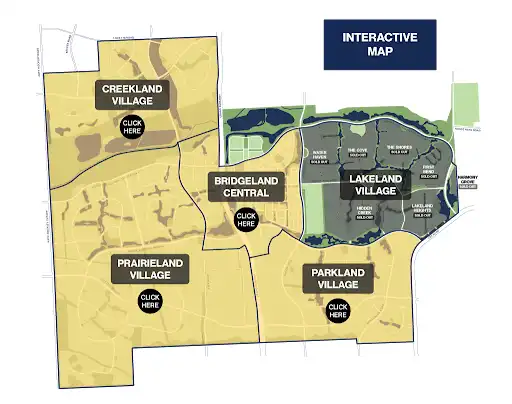
Bridgeland Central Versus Other Bridgeland Villages
Bridgeland Central offers a more mixed-use and urban-inspired experience than many traditional sections of Bridgeland.
Lakeland Village, Parkland Village, Prairieland Village, and Creekland Village each have their own housing, amenities, locations, and stages of development. Buyers in those areas may have larger traditional lots or a more residential atmosphere, while Bridgeland Central places greater emphasis on proximity to commercial areas and pedestrian connections.
Neither approach is automatically better.
Bridgeland Central may suit buyers who prioritize:
- Walkability
- Modern architecture
- Proximity to shopping and dining
- Lower-maintenance housing options
- Future employment and entertainment destinations
Another Bridgeland village may be a better fit for someone who wants:
- A larger backyard
- Greater distance from commercial activity
- A more traditional suburban street
- A particular builder or floor plan
- A location closer to a specific entrance or commute route
Blair Realty Group can help buyers compare the sections based on actual daily needs rather than development marketing alone.
What Bridgeland Central Could Mean for Homeowners
Major commercial and employment development can increase awareness of a community and expand the services available to residents. It may also change how buyers evaluate location within Bridgeland.
Homes with convenient access to shopping, offices, entertainment, trails, and healthcare may appeal to buyers who value proximity. Other buyers may pay more attention to privacy, road access, noise, and distance from active destinations.
No future project guarantees appreciation or a particular resale result. Home value will continue to depend on factors such as:
- Property condition
- Builder and floor plan
- Lot type
- Section location
- Competing inventory
- Tax and HOA costs
- Market conditions at the time of sale
- Proximity to both desirable features and unwanted activity
Current homeowners should monitor development, but pricing decisions should remain grounded in recent comparable sales and active competition.
Buying a Home in Bridgeland Central
Before purchasing, compare the property with homes in other Bridgeland villages and nearby Cypress communities.
Ask the following questions:
- Which nearby amenities are open today?
- What is planned on the vacant land around the property?
- How will construction affect access and noise?
- Is the home attached, detached, front-loaded, or alley-loaded?
- How much private outdoor space does it offer?
- What are the applicable HOA dues and property taxes?
- Which builder constructed the home?
- What warranties, incentives, or upgrade costs apply?
- How does the home compare with resale inventory?
- Does the location support your actual commute and routine?
Contact Blair Realty Group before visiting builder sales offices so the representation and registration process can be handled correctly. You can also read our Guide to Buying a Home in Cypress, TX
Explore Bridgeland Central With Blair Realty Group
Bridgeland Central is changing what it means to live in Bridgeland. It combines residential neighborhoods with a growing mix of shopping, dining, office, healthcare, recreation, and future entertainment uses.
The opportunity is exciting, but the right decision depends on the exact property. Buyers need to understand what is open, what is under construction, what remains conceptual, and how the location compares with other parts of Bridgeland.
Blair Realty Group can help you compare Bridgeland Central homes with options in Lakeland Village, Parkland Village, Prairieland Village, Creekland Village, and other Cypress neighborhoods. Reach out to Blair Realty Group for local guidance before beginning your Bridgeland home search.
FAQs About Bridgeland Central
Is Bridgeland Central a neighborhood?
Bridgeland Central is broader than a single neighborhood. It is the 925-acre mixed-use urban core of Bridgeland and includes residential areas, retail, dining, offices, apartments, parks, healthcare, entertainment, and future employment destinations.
What stores and restaurants are in Bridgeland Central?
Village Green includes H-E-B and a growing mix of restaurants, coffee shops, services, fitness concepts, and healthcare providers. Current businesses include Jonathan’s The Rub, P. Terry’s, Starbucks, Sweet Paris, Crust Pizza Co., Gelato & Co., Memorial Hermann-GoHealth, and other service retailers.
Can you buy a home in Bridgeland Central?
Yes. Housing options include townhomes, detached single-family homes, apartment residences, the Easthaven Collection, City Series, and the developing Emerald Heights neighborhood. Availability depends on current builder and resale inventory.
Is the Houston Texans headquarters coming to Bridgeland?
Yes! The Houston Texans announced plans for a new global headquarters and training complex within Toro District in Bridgeland Central. Toro District is planned as an 83-acre sports, business, healthcare, retail, hospitality, and entertainment destination, with completion currently scheduled for 2029.
Is Bridgeland Central fully developed?
No. Village Green and several residential and commercial components are open or progressing, but Bridgeland Central is a long-term development. Major parts of the district remain under construction, announced, or planned.
Is Bridgeland Central a good place to buy a home?
It may be a strong fit for buyers who want newer housing and closer access to shopping, dining, trails, offices, and future entertainment. Buyers who prefer larger lots, less activity, or more completed surroundings should also compare other Bridgeland villages and established Cypress neighborhoods.
Social Cookies
Social Cookies are used to enable you to share pages and content you find interesting throughout the website through third-party social networking or other websites (including, potentially for advertising purposes related to social networking).